
Grunge, Punk Rock, And Emo Musicians Love The Attention Too
Or They Wouldn't Be On Stage
Posted by Charlie Recksieck
on 2026-02-24
Let's say this right from the top: punk rockers, grunge bands emo kids don't perform because they're on a mission to save the world or express the angst of the human soul. The truth is likely much simpler - those musicians love the attention.
They want to be on stage just like any other performers.
Basically, "Mommy, look!"
If these artists didn't care or want the attention, they'd be scribbling lyrics in their bedroom - not stagediving into sweaty crowds or staring into your eyes while screaming about heartbreak.
Or better yet, they’d be volunteering or political organizing.
Without an audience, the angry artist schtick is just noise and bad posture.
Emo, punk and grunge bands aren't identical in their motivations for attention.
But they’re similar enough so to lump some of these common behaviors here in this post.
Punk
Is there anything less "I don’t give a fuck" than a band passing out flyers on the street to get people to see them play?
Sure, punk has that "rebellion against the system" image and tortured authenticity but strip away the theatrics and you'll find the same human craving at the core: they want to be noticed.
They position themselves as being anti-establishment and shining a light on the corrosiveness of "the man".
Of course, I shouldn't paint punk bands with the same brush.
The Clash and Rage Against The Machine are two examples who really walk the walk; and honestly, they don't play the game of being nihilistic.
Both of the bands actually seem to care ... a lot.
Punk mostly thrives on provocation. Those flying fists, stage dives, and spit-sprayed microphones? They exist only because someone is watching. Without spectators, the angst is private therapy instead of art.
Here's the duality: in the studio, many punk musicians are shy, introverted, and painfully self-critical. Give them a stage and a crowd, and suddenly the same timid songwriter transforms into a real performer, channeling rage, sorrow, and drama. That glimmer in the eye when someone notices?
Pure validation.
Grunge
Just like punk and emo, grunge bands rejected manufactured attention.
But they didn’t reject attention itself. They didn't want choreography, glossy personas, or industry polish-but they absolutely wanted to be heard, felt, and recognized.
Bands like Nirvana, Pearl Jam, Soundgarden, and Alice in Chains certainly didn’t withdraw from visibility.
In the process, they reshaped what rock attention and visibility was.
Even Nirvana’s "anti-performance" performance - slouching, mumbling, turning away from the crowd - was still a performance. Refusing to play the game became a new way of playing it.
If you truly don't want attention, you don't write songs, rehearse them, tour them, and play them at stadium volume. You stay home. Grunge didn't stay home. It grabbed the mic, looked at the floor, and made sure everyone was watching.
Emo
Emo later pushed all of this even further. Where grunge masked its need for attention behind detachment, emo didn’t hide emotional exposure at all; just the opposite. Those bands didn't deny the audience - they needed them. The room supposedly became a witness to some common vaguely upset emotion, not just sound. In that sense, emo was more honest about attention than punk ever was.
On the plus side, the genre's defining move was not rejecting attention, but reframing it as intimacy. Emo’s message isn't look at us; it was sort of like "you weren't supposed to see this".
That move is a lot like modern authenticity marketing, which insists it isn't selling anything except for a peek behind the curtain.
Emo didn't reject the audience. It pretended not to need one. Modern authenticity marketing does the same, just with better analytics.
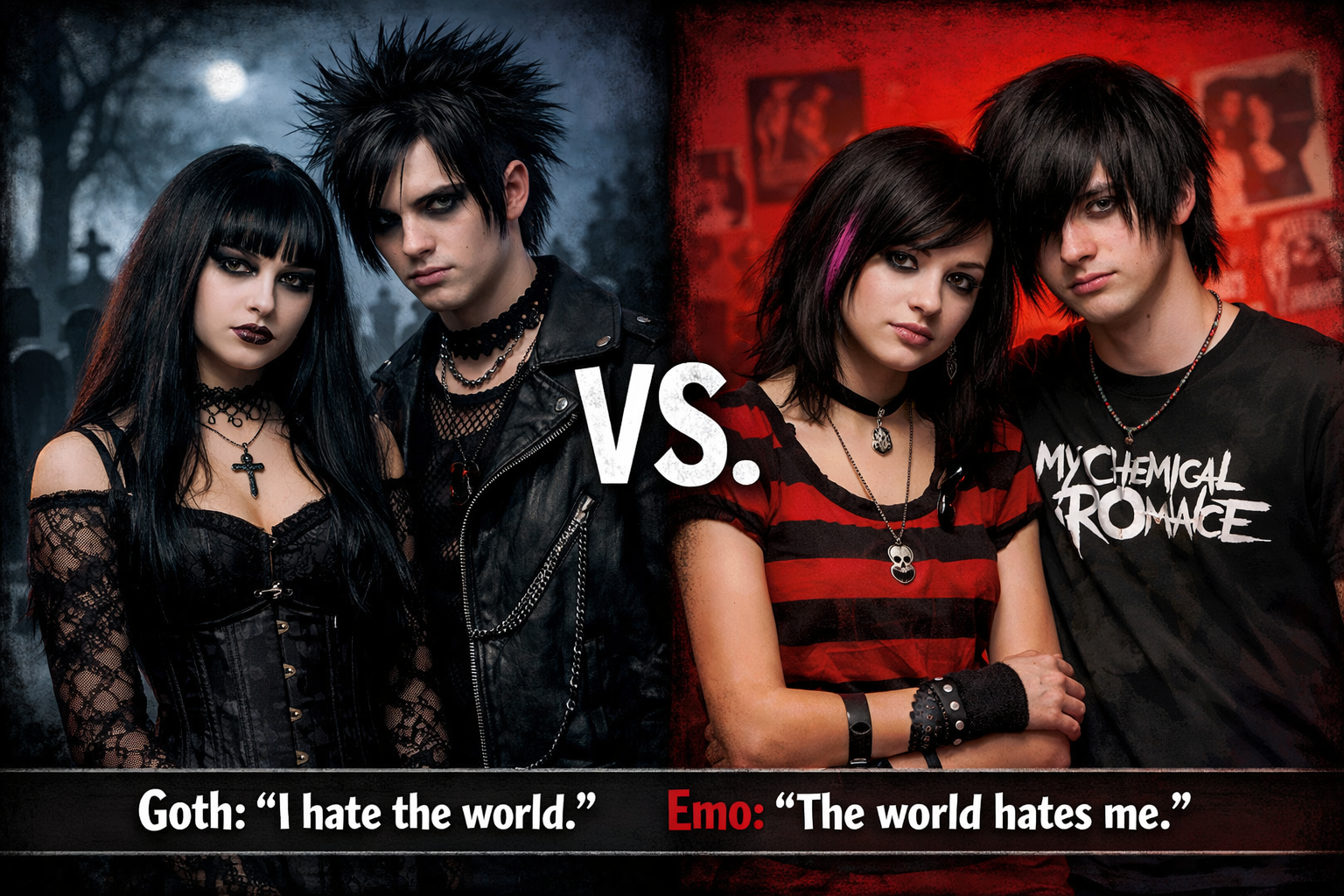
In case we're wondering about where "goth" fits in with "emo", here's a cartoon:
 Social Media & Fans
Social media has supercharged this phenomenon. TikTok clips of screaming, Instagram stories of backstage chaos, Twitter threads dissecting lyrics - these platforms have made attention-seeking part of the job. Bands once content with a small venue now chase likes, views, and viral fame with the same intensity they used to chase applause.
I’ll admit it, every band in every genre has to be doing something on social media.
Personally, I find posting on Instagram a lot less gross than emailing or text blasting everybody on your mailing list about every show; social media is more opt-in to see you and a little less invasive.
Even so, it’s a bit of a trap for bands that allegedly hate attention to have to seek publicity.
Artistic expression? Maybe. But mostly it's a curated attention economy.
Fans are the enablers. You pogo, they pogo harder. You cry, they sob louder. You scream, they scream with you. Without it, all the screaming, moaning, and confessional angst is just whining-and nobody wants to hear whining in the shower.
At this point I apologize a little for this whole post coming off as petty and bitchy.
If fans are truly enjoying themselves, what’s wrong with feeling good.
But come on guys, lighten up.
Who's Most Annoying
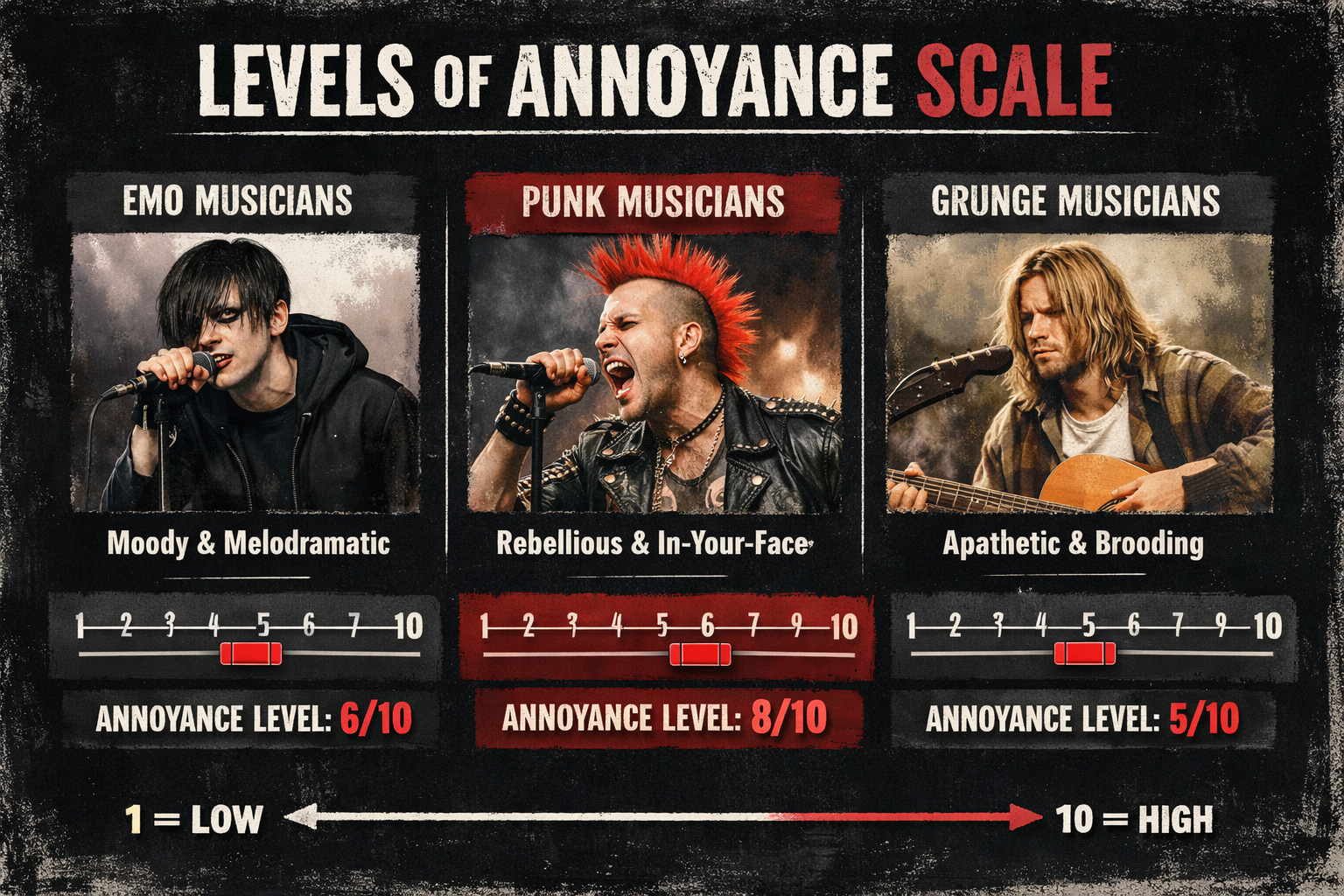
I'll go with emo as most annoying, personally.
The Takeaway
The "tortured artist" is always portrayed as the cool one.
In the Beatles, John allegedly had integrity, whereas Paul was seen as the sellout.
Total bullshit.
Pop artists have just as much to say as singers in angrier genres, perhaps more so.
Punk, grunge and emo musicians perform for attention because that's the point. Their rebellion, vulnerability, and chaos are the vehicle; applause and the energy are the fuel. And if you're in that sweaty audience, congratulations: you're the reason they climbed the stage ready to be adored, heckled, or loved.
Without the audience, none of this works. No spiked hair, no angst, no screaming lyrics. The myth of the selfless tortured artist? Pure PR. Punk, grunge and emo exist to be noticed, and if they didn't crave it, they'd never leave the bedroom.
Last thought: I do find it funny that fans turn to musicians or songwriters for inspiration or their take on life.
Musicians are anti-social, late-sleeping weirdos.
If you met that grunge singer in real life on the street you wouldn’t trust him to park your car or get you a cup of coffee.
And you’re taking life advice from this guy through his music???

