The Music Bizness
Yucch
Posted by Charlie Recksieck
on 2026-06-02
Most of us musicians had a calling to express themselves, maybe impress a couple of girls, sleep in, and not work in an office.
We are free spirits, not businessmen.
But somewhere along the way, that's what we all became.
Making music and getting heard are two different skill sets, but both need to happen.
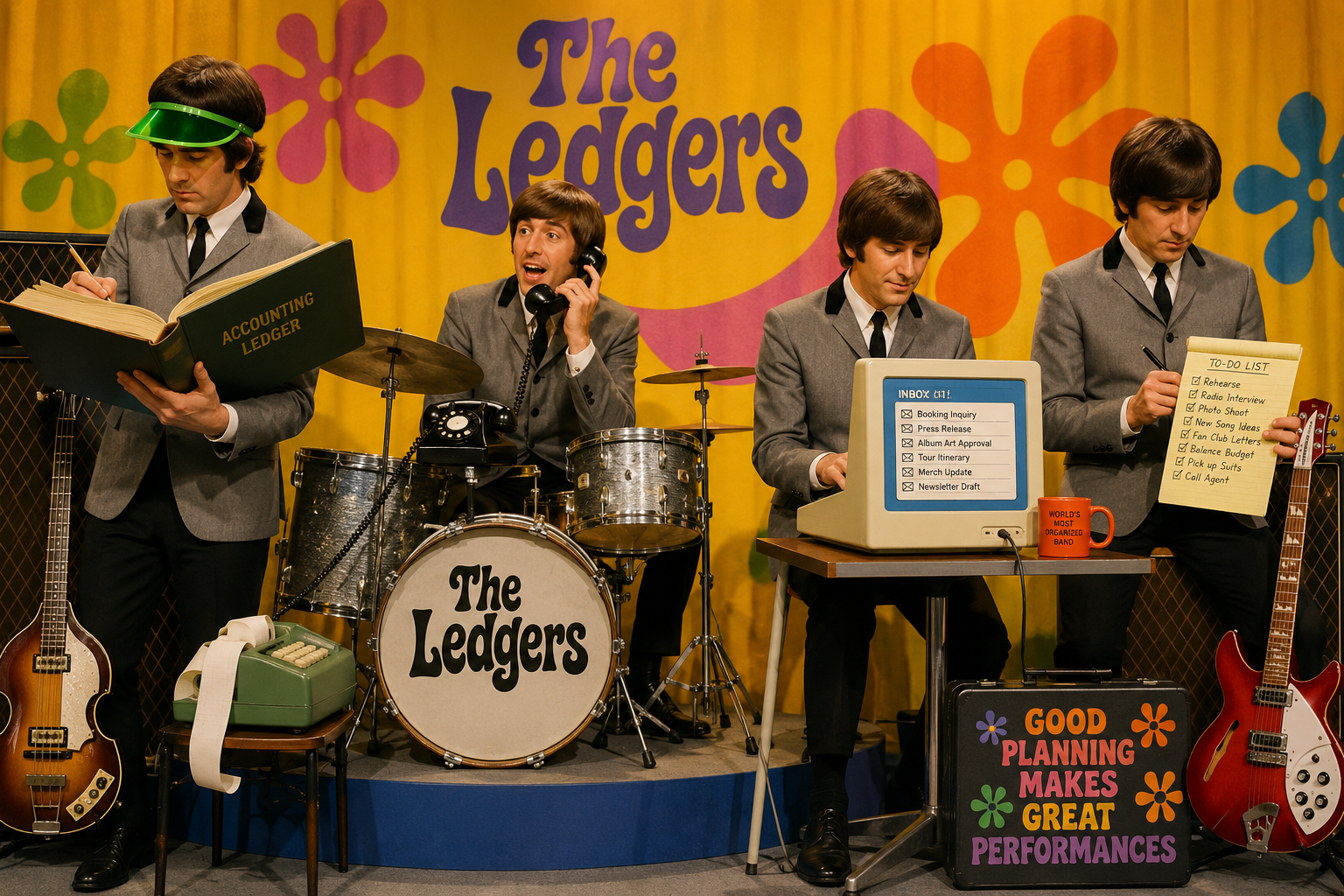
Running a band is basically running a business.
Music Is Fun, The Music Business?
Not So Much
I think we all feel the tension between art and commerce.
Of course, job #1 is making the music - yet on top of that, we keep getting told that we need to grow our social media reach, get onto Spotify lists, and plan those tours.
But every minute we spend clicking Like on Instagram is time without a guitar in our hands.
Every typed email to a Spotify curator is time not writing new lyrics.
All of the hours spent planning a tour happen in front of a laptop and not a piano.
It's all a little overwhelming and few of us are very good at the non-music parts.
There are so many copywriting, legal, advertising and marketing responsibilities.
A whole industry of help for artists was created; that's where the door opens for experts, artist services and PR professionals.
Terrific.
While we're expected to work for free "for the opportunity", now we're expected to pay the music industry advice complex for their help.
Somebody is getting paid in music and it's usually not the musicians.
It's not just musicians on the short end of the stick - there seems to be two tiers of people in the creative world.
The first are the creators: musicians, songwriters, photographers, and writers.
The second layer is the while labels, PR agencies, demo studios, consultants and "industry experts".
Of course, plenty are legit - but discerning the difference is just one more non-music thing we have to take care of, with real consequences for getting it wrong.
Guess which tier is actually making money - artists or handlers?
The rule of thumb seems to be that the further you are from actually writing or playing, the more likely you are to be getting paid.
To "break in," artists are expected to do a lot of free labor.
The same economic pressures affecting artists also affect everyone supporting music culture.
Copywriters or reviewers need to hone their craft for low or no pay until they land with a prestige outlet.
Photographers do a lot of work just for the credit, and maybe 2 tickets to a concert.
Who am I kidding?
1 ticket to a concert.
Help Me Obi-Wan, You’re My Only Hope
 Artists want to break through the noise and get their music heard.
I feel like most of us aren't looking for a shortcut, just a fighting chance.
And those of us who are serious aren't afraid of paying for services - it’s just sometimes very hard to tell what we get for our money.
For whatever reason, in the music industry, "deliverables" are hard to nail down.
Artists want to break through the noise and get their music heard.
I feel like most of us aren't looking for a shortcut, just a fighting chance.
And those of us who are serious aren't afraid of paying for services - it’s just sometimes very hard to tell what we get for our money.
For whatever reason, in the music industry, "deliverables" are hard to nail down.
It's hard to separate the actual helpful ones from the exaggerated hucksters and also from the outright scams.
I have a friend applying for relatively low copywriting job and it was a straight up scam with phony checks, and applicants buying equipment scheme so convoluted it's not worth detailing.
But the detail I can't get over there is that the scammers' moneymaking plan is to prey on people looking for work.
Congratulations guys, I hope you sleep well at night.
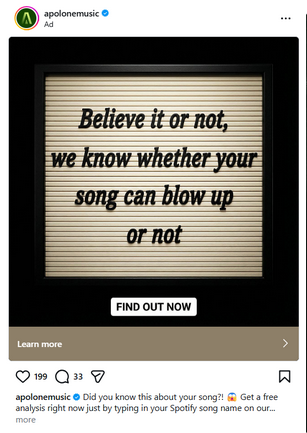
More common are semi-legitimate services that don't move the needle; they just move $70 from the musician to the service.
Things like social media growth services or Spotify playlist placement services.
Yes, you pick up some empty numbers but no engagements, and you won't fool anybody in the industry with the 5000 followers and no comments, or dummy playlists.
Don't get me wrong; every band needs help.
A roadie slash front-of-house sound person is hire #1.
The second person on board should be a helpful consultant.
Finding the right professional for that job isn't as easy as it might seem.
It's hard to separate the wheat from the chaff when it comes to music marketing courses and artist branding/websites.
In my experience, when you see a service promising the one secret thing that will rocket you to the top, run the other direction.
Actually, my favorite red flag is ANYTHING FROM A "REAL DEAL" PROMOTER WHO WRITES IN ALL CAPS.
Ooh, that just gave me the shivers.
Start A Fire, They Show Up With A Match
Let's face it, even legitimate PR people, boutique labels, sync agents can be very helpful once you're on your way as a creator.
But the rule of thumb is that you've got to get noticed first and demonstrate some successes, then they'll consider you worth their time.
And honestly, I understand why these legit industry people have to operate this way.
But I'll never forget this piece of advice I once got from a manager, which ended up as a warning. It's a backwards Catch-22 and, unfortunately, it's just the way it is:
Artists need to start a fire, then a manager or label shows up with a match afterwards.
It's funny but all kinds of creators on the hyper-indie level are all in the same boat - but count on each other.
Smaller publications are labors of love (aka "unpaid") relying on a few Patreon fans and artistic passion to even exist.
Those hard-working editors are working with aspiring writers who need the writing outlet as a leg up.
They need accessible bands to cover just because they need the publicity.
And in the article, you'll usually find great pictures taken by photographers who didn't get paid.
Whether they know it or not, the various parts of this indie ecosystem are all on the same side of the table.
They're underpaid, if at all, and they need each other.
And they all are victims of the same wonderful addiction to loving being an artist.
There have long been music communities.
But we think of those as groups of established artists like Joni Mitchell at Stephen Stills' house in Laurel Canyon.
Today's real artist communities are underdog creators with the "let's put on a show" mentality.
But you can only survive on Judy Garland and Mickey Rooney gumption for so long.
A starving artist's career has an expiration date.
The constant hustle and navigation of the "industry helpers" gets old quickly.
Let’s Stay Positive
So, what should artists do when it comes to choosing who to align with?
I've advised against some red flag services.
It's easy to be against something, but what am I recommending?
Unlike most PR advice, there's not a lot of magic formulas here:
* I’ve found that the best advice comes when you present yourself professionally and ask some experts for advice about what to do next.
* Try targeted consultation, not open-ended coaching subscriptions
* Avoid "let me skip the line and give me my big break" asks.
Seriously, don't be that guy.
* Befriend that filmmaker you met, or photographer or copywriter. Again, you’re all on team indie - there’s plenty for all of you to do to help each other.
* Commiserate or share with somebody who does what you do.
If you're both aspiring writers, share your contact database of editors.
If you're both musicians, have a Zoom support group.
* If you're sharing or helping another friend, but that help never comes back your way, there's a red flag for you.
* With any PR service, get SOME deliverables.
How many hours are they spending promoting your project?
How many music supervisors are they reaching out to?
* Try to make sure your product is as good as possible.
It should go without saying.
That said, it's gonna be hard for you to be impartial.
But ...
* If you're getting the same comment or particular note about your art, pay attention.
1 person saying your article's introduction was confusing.
6 editors all saying it, that needs fixing.
Remember that your work has value and you have value as an artist.
I said at the top that creators need to be everything - an artist AND a business.
But you also have to be simultaneously pragmatic/realistic AND aspirational.
There are so many paradoxes in this.
Yes, you need to be willing to dip into your pocket and invest in your own career - but be very careful of who's asking for money and what they're gonna do for you.
Some friends in the right places can help you in your career, but there really is no "skipping the line"; we've all gotta do the work.
The beauty is that if you love this creator stuff, doing the work doesn't quite feel like work.
Even when you're both a band and a business.
Some People Are Rooting For You
I'll close by saying that I helped a friend casting a play once at auditions.
It was my first time on that side of the physical and metaphorical table.
I found myself rooting for every single person who was auditioning.
That gatekeeper wants you to succeed.
And as far as the music industrial advice complex is concerned; you've got terrific experts ready to help, well-meaning but inefficient ones, and also a few bad actors who just want your money.
The problem isn't that there's no advice for bands; it's that there's too much advice.
Choosing the right people to help us get our music heard lets us get back to the only thing we're actually qualified for: making the music.

